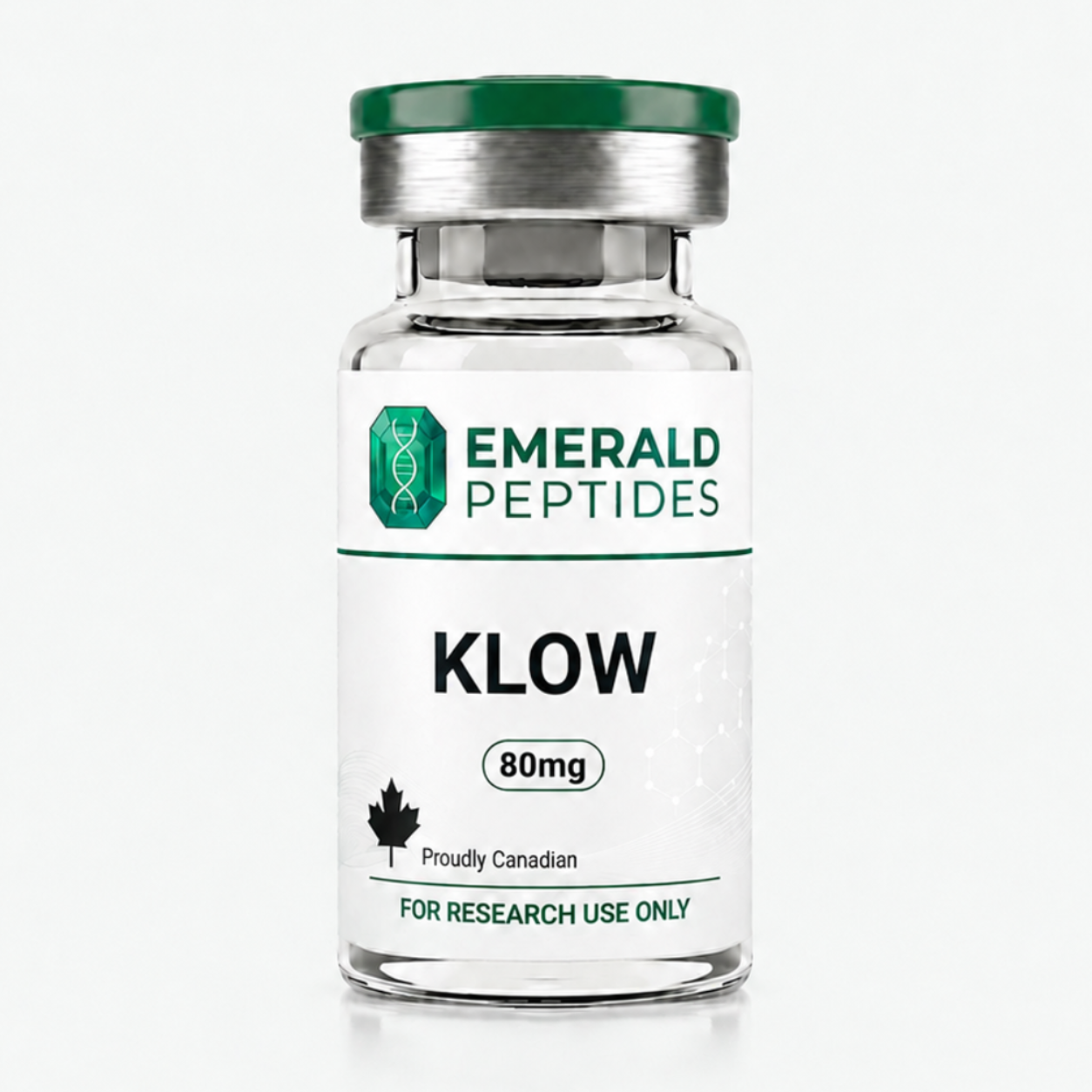
KLOW Stack (BPC-157 + TB-500 + GHK-Cu + KPV)
KLOW Stack (BPC-157 + TB-500 + GHK-Cu + KPV)
In stock
- Lab Tested for Purity & Quality
- Fast & Secure Shipping
 Manufactured in Canada


Buy KLOW Stack in Canada — Multi-Mechanism Regenerative Research Blend
Buy KLOW Stack in Canada as a matched-batch, four-compound research kit combining BPC-157, TB-500, KPV, and GHK-Cu into a single sourcing package for multi-mechanism regenerative research designs. The stack pairs vascular and cytoprotective activity (BPC-157), cellular migration and cytoskeletal regulation (TB-500), anti-inflammatory tripeptide activity (KPV), and copper-mediated extracellular matrix remodeling (GHK-Cu) — four complementary mechanisms that don't overlap, giving research designs parallel-pathway coverage of tissue repair, inflammation modulation, and matrix biology in a single ordering unit. Each vial in the stack ships at ≥99% HPLC purity with mass-spec-verified identity, batch-specific certificates of analysis for every compound, and fast domestic Canadian shipping.
Product Details
- Format: Four-vial matched-batch research kit
- Kit contents: 10 mg BPC-157, 10 mg TB-500, 10 mg KPV, 50 mg GHK-Cu
- Total peptide: 80 mg across four separate vials
- Form: Lyophilized peptide (each vial)
- Fill: Each vial filled to approximately 104% of label
- Purity: ≥99% (HPLC-verified per compound)
- Identity: MS-verified
- Storage: 2–8 °C, protect from light
What Makes KLOW Stack a Unique Compound Kit
KLOW Stack combines four of the most extensively studied regenerative research peptides into a single matched-batch ordering unit. Each constituent operates through a distinct, non-overlapping mechanism — BPC-157 modulates nitric oxide signaling and VEGFR2-mediated angiogenesis, TB-500 (synthetic thymosin β-4) regulates the actin cytoskeleton through G-actin sequestration, KPV (the C-terminal tripeptide of α-MSH) inhibits NF-κB and suppresses TNF-α, IL-6, and nitric oxide production, and GHK-Cu (a copper tripeptide) drives collagen synthesis, glycosaminoglycan production, and gene expression changes across thousands of human genes. Together, the four compounds cover vascular, cytoskeletal, inflammatory, and extracellular matrix mechanisms simultaneously.
The stack format extends the design logic of our existing multi-compound kits. The Wolverine Stack pairs BPC-157 with TB-500 for two-mechanism tissue repair research; the Glow Stack adds GHK-Cu for three-mechanism dermal and ECM research; KLOW Stack adds KPV to establish a four-mechanism regenerative research kit that also engages anti-inflammatory biology. For research designs investigating tissue repair and inflammation modulation in parallel — particularly gut mucosa repair, dermal wound healing, or connective tissue regeneration research — the four-mechanism coverage provides broader pathway characterization than any three-compound combination alone.
Key Benefits
- Four-Mechanism Coverage — Vascular and cytoprotective (BPC-157), cytoskeletal migration (TB-500), anti-inflammatory NF-κB modulation (KPV), and ECM remodeling with gene expression modulation (GHK-Cu) — four non-overlapping mechanisms in a single research kit for parallel-pathway investigation.
- Tissue Repair and Wound Healing Research — Combined BPC-157 and TB-500 activity provides the most-published pairing in soft-tissue repair research, while KPV addresses inflammatory phase modulation and GHK-Cu addresses the extracellular matrix remodeling phase — allowing research designs to characterize the full repair cascade rather than isolated mechanisms.
- Inflammatory Modulation — KPV inclusion extends the stack beyond pure regenerative research into inflammatory disease models — DSS colitis, CD45RB(hi) transfer colitis, and dermatological inflammation research designs — where inflammatory suppression alongside tissue repair is the target research profile.
- Dermal and Skin Research — GHK-Cu's characterized effects on collagen, decorin, and glycosaminoglycan synthesis in dermal fibroblasts, combined with TB-500's keratinocyte migration effects and KPV's anti-inflammatory action, produce a research kit particularly suited to dermatological research designs investigating skin repair, hair follicle biology, and dermal aging.
- Matched-Batch Documentation — All four compounds ship with paired COAs from a single supplier batch cycle, simplifying supply-chain documentation for research designs requiring analytical traceability across multiple compounds simultaneously — a compliance advantage for IRB-supervised research and multi-compound experimental protocols.
Related Peptides
Researchers working with KLOW Stack often investigate it alongside:
- Wolverine Stack — Two-compound BPC-157 + TB-500 matched-batch kit for soft-tissue repair research designs that don't require inflammatory or ECM mechanism coverage.
- Glow Stack — Three-compound BPC-157 + TB-500 + GHK-Cu matched-batch kit for dermal and ECM research designs that don't require the anti-inflammatory KPV component.
- NAD+ — Cellular bioenergetic cofactor investigated alongside regenerative peptides in research designs extending tissue repair investigation into mitochondrial function and sirtuin biology.
- MOTS-c — Mitochondria-derived peptide studied alongside tissue repair compounds in research designs integrating cellular energy metabolism with regenerative research applications.
Frequently Asked Questions
How is KLOW Stack different from the Wolverine Stack or Glow Stack?
All three stacks are matched-batch multi-compound research kits, but each covers a different number of mechanisms. Wolverine Stack combines BPC-157 and TB-500 for two-mechanism soft-tissue repair research. Glow Stack adds GHK-Cu for three-mechanism dermal and ECM research. KLOW Stack extends the combination to four mechanisms by adding KPV, incorporating anti-inflammatory activity alongside the vascular, cytoskeletal, and ECM mechanisms of the smaller stacks. Research designs that need inflammatory modulation alongside tissue repair benefit from the KLOW Stack's four-mechanism coverage.
Why does the KLOW Stack include KPV instead of another peptide?
KPV is the C-terminal tripeptide of α-melanocyte-stimulating hormone (α-MSH) and one of the most extensively characterized anti-inflammatory tripeptides in current research. It operates through NF-κB pathway inhibition and cytokine modulation — mechanisms that don't overlap with BPC-157's angiogenesis, TB-500's cytoskeletal regulation, or GHK-Cu's ECM remodeling. The mechanism non-overlap is what makes KPV the appropriate fourth compound for research designs requiring parallel-pathway coverage of tissue repair alongside inflammation modulation.
What research applications is the KLOW Stack designed for?
The stack's four-mechanism coverage is designed for regenerative research designs that require simultaneous investigation of tissue repair (BPC-157, TB-500), inflammation modulation (KPV), and extracellular matrix remodeling (GHK-Cu). Common research contexts include gut mucosa repair models (particularly IBD and colitis research where KPV's anti-inflammatory action is central), dermal wound healing and skin repair research (where all four mechanisms contribute simultaneously), and connective tissue regeneration research designs investigating the full repair cascade from initial inflammatory response through matrix remodeling.
⚠️ For research use only. Not intended for human or veterinary use. Not a drug, food, or supplement.