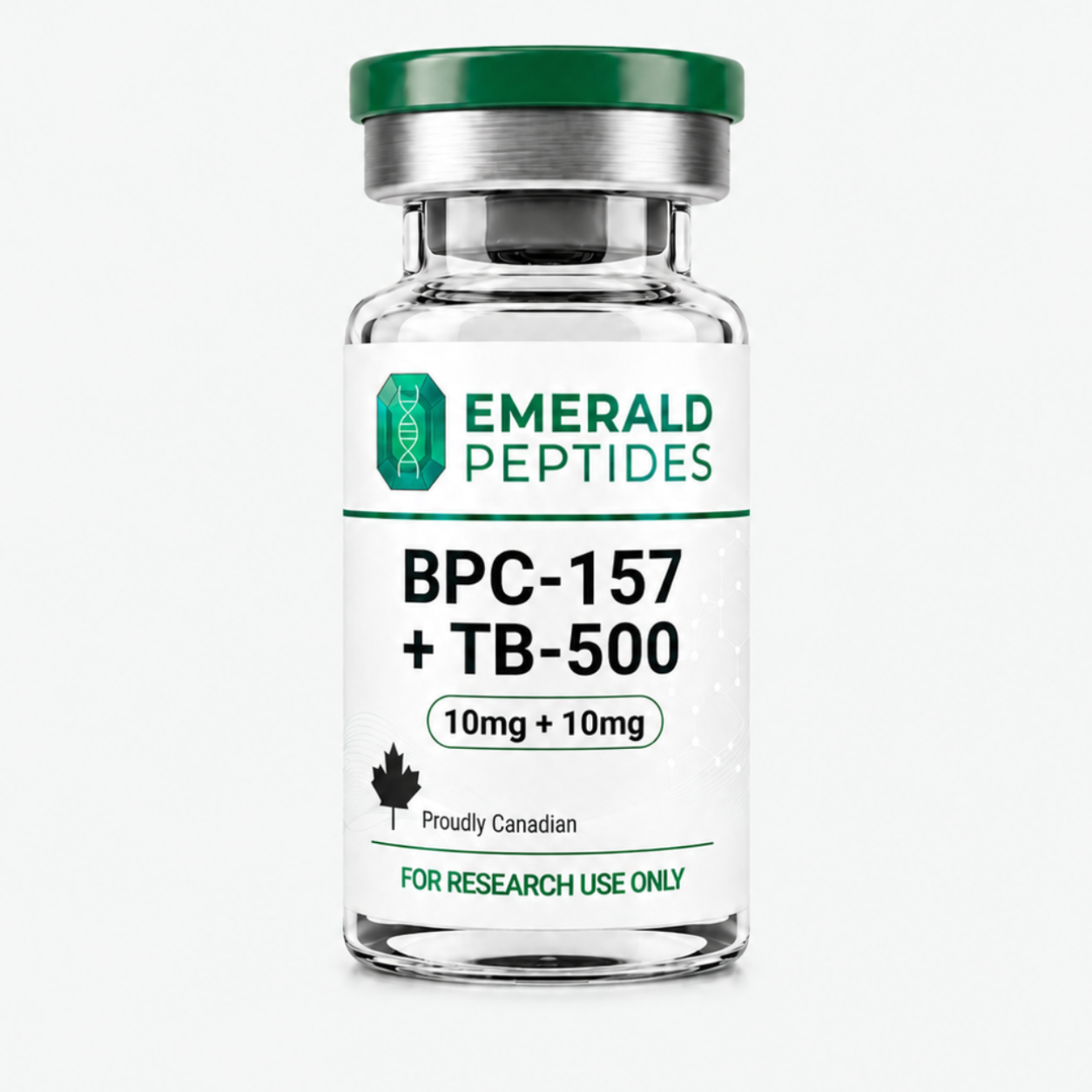
Wolverine Stack (BPC-157 + TB-500)
Wolverine Stack (BPC-157 + TB-500)
In stock
884 units sold
- Lab Tested for Purity & Quality
- Fast & Secure Shipping
 Manufactured in Canada


BPC-157 + TB-500 Stack — The Wolverine Stack Blend
The Wolverine Stack combines BPC-157 and TB-500 into a single matched-batch research kit for parallel-pathway tissue repair and recovery research designs. This BPC-157 TB-500 stack is built around mechanistic complementarity — BPC-157 engages nitric oxide signaling and VEGFR2-mediated angiogenesis, while TB-500 engages actin cytoskeleton regulation through G-actin sequestration. The two pathways don't overlap, which means research designs can probe both vascular and cytoskeletal mechanisms simultaneously without confounding mechanism-specific effects. Both compounds in the stack ship at ≥99% HPLC purity with mass-spec-verified identity, separate batch-specific certificates of analysis, and fast domestic Canadian shipping.
Product Details
- Form: Two lyophilized peptides, supplied as a kit
- Net per kit: 10 mg BPC-157 + 10 mg TB-500 (each filled to approximately 104% of label)
- Purity: ≥99% (HPLC-verified, both components)
- Identity: MS-verified per COA (both components)
- Storage: 2–8 °C, protect from light
- Components: See individual product pages for full sequence, formula, MW, and CAS data
What Makes the Wolverine Stack a Unique Combination
The BPC-157 TB-500 stack reflects what is now the most common pairing in published soft-tissue repair research with these two peptides. The rationale is mechanistic non-overlap: rather than two compounds acting through the same pathway with redundant effects, BPC-157 and TB-500 engage distinct targets — the former operating through nitric-oxide-pathway and VEGFR2 modulation, the latter through actin-cytoskeleton regulation. Research designs that incorporate both compounds can therefore probe parallel repair pathways in the same model system without confounding mechanism-specific effects.
The combination also reflects the breadth of the underlying literature. BPC-157 has been characterized in over 100 published animal studies spanning gastrointestinal, musculoskeletal, vascular, and neural injury models. The thymosin β-4 literature spans more than four decades and covers wound healing, cardiac repair, neural regeneration, and inflammation. The Wolverine Stack gives Canadian research groups a single supply point for both reference compounds, with batch-specific certificates of analysis confirming ≥99% HPLC purity for each constituent.
Key Benefits
- Parallel Repair Pathway Investigation — The combination allows research designs to address nitric-oxide-pathway and actin-cytoskeleton mechanisms simultaneously, with each peptide serving as a tool for its respective pathway in the same model system.
- Soft Tissue & Tendon Models — Published rodent studies of Achilles tendon transection, medial collateral ligament injury, and muscle crush have characterized BPC-157 and TB-500 effects independently; combined research designs build on both literatures.
- Angiogenesis & Vascular Remodeling — Both peptides have documented pro-angiogenic activity — BPC-157 via VEGFR2 upregulation, TB-500 via endothelial cell migration and capillary network organization — making the stack a focused tool for vascular research.
- Cardiac Repair Research — Murine ischemia-reperfusion models have separately reported reduced infarct size with TB-500 and improved vascular outcomes with BPC-157, with combined-administration designs appearing in more recent published preclinical work.
- Inflammatory Modulation — Both compounds have measured effects on cytokine expression and NF-κB signaling in published models, supporting research designs that address tissue repair coupled with inflammatory-pathway endpoints.
Related Peptides
Researchers working with the Wolverine Stack often investigate it alongside:
- BPC-157 — Available as a single-compound vial for research designs requiring BPC-157 alone or at non-stack ratios.
- TB-500 — Available as a single-compound vial for research designs requiring TB-500 alone or at non-stack ratios.
- Glow Stack — Adds GHK-Cu to the BPC-157 + TB-500 backbone for research designs extending repair endpoints into ECM remodeling and skin biology.
Frequently Asked Questions
Where can researchers buy the BPC-157 TB-500 stack in Canada with verified purity?
Our Wolverine Stack ships to Canadian research labs and independent investigators with two batch-specific certificates of analysis — one per component — confirming ≥99% HPLC purity and mass-spec identity verification for both BPC-157 and TB-500. Each vial is filled to approximately 104% of the labeled 10 mg as a quality margin for residual losses during reconstitution work, and orders dispatch from within Canada to avoid border-related cold-chain interruptions.
How is the Wolverine Stack different from buying BPC-157 and TB-500 separately?
Functionally, the contents are identical to single-compound vials of each peptide. The Wolverine Stack format is a packaging convenience for research designs that always use the two compounds together — kit shipping reduces logistics overhead, and matched batch documentation is provided. For research designs that require one compound at a different ratio than the other, or that don't always use both, sourcing each compound individually may be more appropriate.
Why are BPC-157 and TB-500 so commonly studied together?
The two peptides act through entirely different molecular mechanisms, which makes their combination useful for parallel pathway investigation rather than redundant pathway coverage. BPC-157 modulates nitric oxide signaling and upregulates VEGFR2-mediated angiogenesis. TB-500 regulates the actin cytoskeleton through G-actin sequestration. In published animal studies of soft-tissue injury, the two compounds appear together more frequently than any other peptide pairing in the repair-research literature.
Are both peptides naturally occurring?
Partially, in different ways. BPC-157's 15-amino-acid sequence corresponds to a region of body protective compound, a protein identified in human gastric juice; the synthetic peptide is the isolated fragment. TB-500 is the synthetic full-length sequence of thymosin β-4, an actin-binding peptide endogenous to most mammalian cell types and originally isolated from calf thymic tissue.
⚠️ For research use only. Not intended for human or veterinary use. Not a drug, food, or supplement.